The Owner's Trap: How to Fire Yourself from Day-to-Day Operations

I hope you enjoy reading this blog post.
Author: Brady Carlson | Co-Founder of Dirt2Dollars
Published Date: 24 December, 2025
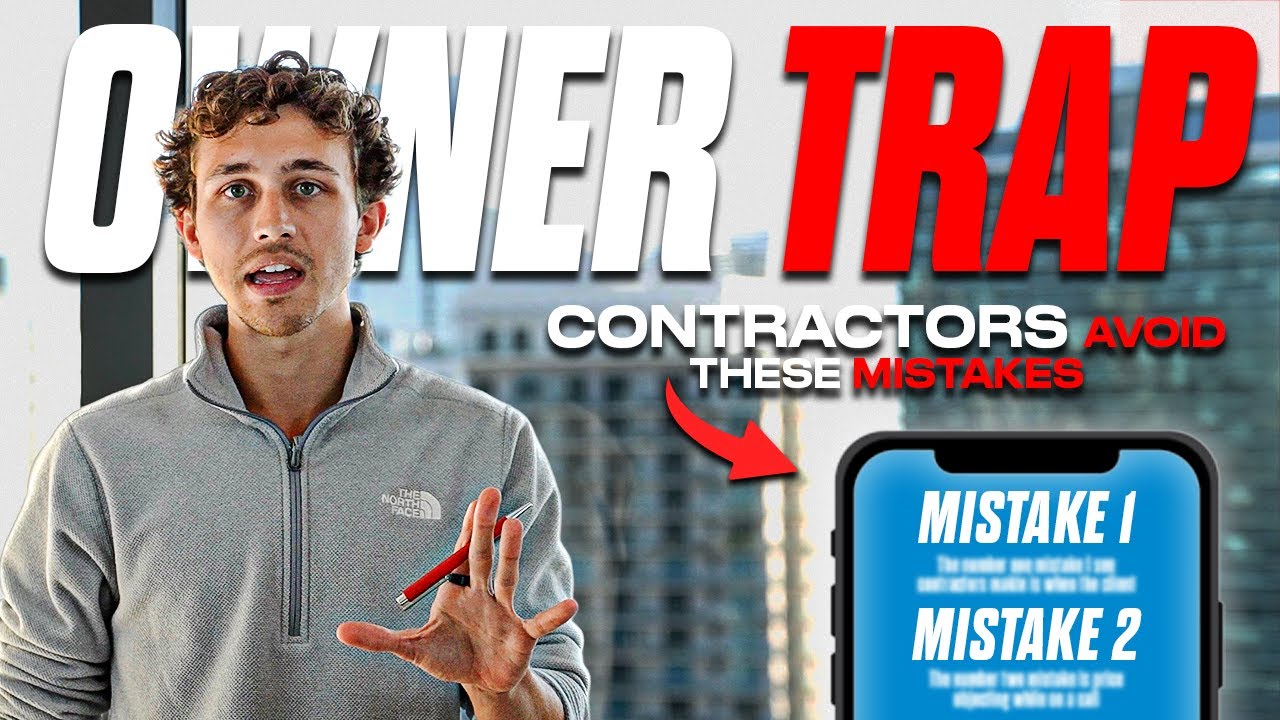
Key Takeaways:
- The owner’s trap is doing all the work AND getting all the work. You can’t scale when you’re stuck in both roles
- The golden rule: put sales first, get really good at sales, so you never wonder when your next deal is coming
- The mindset shift is the hardest part, learning to let go and delegate, even when it’s uncomfortable
- Good employees should pay for themselves 4-6x over, by freeing you to close more deals
- You need three systems to escape: predictable inbound acquisition, efficient project management, and bulletproof hiring
- Hire acquisition first, operations second; you can’t scale without jobs, and you can’t focus on sales if you’re doing all the work
- Success metric: step away for 2 weeks, and nothing breaks; the business continues scaling without you
- It’s a slow process; you might not notice it happening until one day you realize you’re doing sales all day instead of being on jobs
- Sales should be the last thing you outsource; do this yourself as long as possible
Table of Contents:
What is the Owner's Trap?
To truly scale your business, you must position yourself away from being the person who’s doing all of the work AND the one who’s actually getting all of the work.
It’s called the owner’s trap.
We see owners in many different contracting businesses, owner operators, and the land management side of things get absolutely stuck. They put themselves in a position where they can’t actually scale their business because they’re trapped in both roles.
You’re on the job site running equipment, installing materials, doing the actual work. And you’re also the one answering calls, qualifying leads, running estimates, and closing deals.
When you’re stuck doing both, you plateau. You hit a ceiling you can’t break through because there are only so many hours in a day.
The Goal
We want you to be in a position where you can step away from your business for a whole week and go on vacation with your family or go on a fishing trip, and nothing within your business breaks. It’s still making money, and everything is still thriving and scaling itself.
That’s the goal. And getting there requires mindset shifts and systems that let you get out of the day-to-day and focus on the highest-ROI activities that actually move your business forward.
The Golden Rule: Sales First
There’s a golden rule for any owner trying to scale a business: you have to put sales first, and you have to get really, really good at sales.
That way, you’re never wondering when your next deal is going to come through or how you’re going to get your next deal. You’re confident in your selling abilities and your ability to keep work stacked on the calendar.
Sales should be the last thing you outsource. You should be doing sales until you absolutely can’t anymore or don’t have to. Everything else, operations, fulfillment, day-to-day work, can and should be delegated before sales.
The Mindset Shift You Must Make
The first thing you need to change is your mindset. And it sounds silly or cheesy, but you have to tell yourself that it’s okay to let go of certain things and actually be willing to pay for good help.
You need to invest in good, trustworthy talent within your business. Even though it might make you squirm a little bit at the thought of how big the paycheck is that you have to send out every single month, it keeps you in a position where you don’t have to worry about all the projects you have going on.
When You’re Ready to Delegate
Before you can delegate effectively, you need to be in a position where you’ve:
- Perfected the service
- Closed enough deals
- Been on enough projects yourself
- Can do what you’re selling like the back of your hand
You don’t want to teach somebody from scratch because that’s a huge time waster. You want to be comfortable paying somebody trustworthy to come in, start doing the work in-house for you, and build a crew.
Whether it’s starting with a foreman, a good operator, or something that allows you to get off the job site, while that job is being completed, you’re able to focus on talking to more qualified buyers, people who want to buy your services, and closing more deals, collecting more cash for the business.
That’s where you start to see scalability.
Why It’s Uncomfortable
I see this happen with so many guys. And I’ve struggled with this myself as a business owner. It’s really just letting go and being okay with delegating certain tasks.
It is an uncomfortable thing. Delegation is uncomfortable. But I’m telling you, you’re going to have to bite the bullet and do it. Everybody goes through it.
Otherwise, you will reach a certain level and plateau there.
I can say with 99.9% certainty that it will happen if you do not delegate, and if you don’t delegate appropriately.
It’ll keep you stuck in the business. And when you do try to leave, when you try to go out of town on vacation, everything falls apart. Deals fall through. Jobs don’t get done. People find other contractors to do their jobs. It’s a complete disaster.
Obviously, a position you do not want to find yourself in.
The ROI of Good Employees
Here’s what most people miss about the ROI of hiring good employees:
Those people you might have to pay top dollar for, or maybe a dollar amount you’re not very comfortable with, or it’s tough for you to wrap your mind around, those people should be paying for themselves four times over, five times over, six times over.
How? By allowing you to focus on pushing more cash into the business by closing more deals.
When you hire a good operator at $30/hour, and that frees you up to close an extra $50K in jobs that month, that operator didn’t cost you money. They made you money. A lot of money.
That’s the mindset shift. It’s not about what you’re paying them. It’s about what they enable you to earn.
System 1: Predictable Inbound Acquisition
The first system you need to have in place, even to attempt getting yourself out of the day-to-day, is a predictable inbound acquisition system.
You need a predictable system that delivers new leads into your business on a daily, weekly, and monthly basis. So you’re never guessing when leads will come in. You’re never guessing where the next job’s going to come from.
You have multiple acquisition sources built out within the business that keep you busy with sales and keep jobs stacked up on the calendar.
Key Acquisition Channels
Meta (Facebook and Instagram): running profitable campaigns on this platform is huge. This is where your buyers are scrolling daily.
Website: A strong website presence captures overflow traffic from your Facebook, TikTok, and YouTube campaigns.
Google Ads, Buy your way to the top spot for high-intent searches.
Organic SEO, Get yourself to those top ranking spots on Google over the long term so people are always finding you.
Why This System Comes First
Having a solid inbound acquisition system makes everything else possible. You’re not going to be able to step away by simply relying on word of mouth or referrals. Or at least it’s going to be incredibly hard to do so and maintain it for years.
You need that predictable inbound acquisition system.
System 2: Efficient Project Management
The second system you need is an efficient project management system—one that’s rinse-and-repeat.
Every job that comes through, your whole team, the entire crew, is on the exact same page. Everybody knows what’s going on. “Hey, we have this job coming in. Rinse and repeat. I shouldn’t even have to tell you guys, what to do. Here’s the standard operating procedure. Go and get it done.”
What This Looks Like
You need a system that keeps your guys and your crews from guessing. They just know it. It’s simple. It’s quick to understand. It sticks with them. They’re able to hit the ground running.
You can say: “This place, this time, this date, this is when we’re starting. Get out of here. This is what we’re doing. Get it done.”
It shouldn’t take up much of your time, aside from a pre-job meeting with the team for larger projects. But everybody should know exactly what’s going on.
SOP Everything
It should be SOPed, on a document in a format that they’re easily able to receive it and understand what’s going on for any project you might be selling.
Whether it’s roofing, plumbing, HVAC, pool installation, land clearing, forestry, or mulching, you can SOP all of that stuff. At least all the easy stuff, all the simple to understand stuff, your guys can know it like the back of their hand.
So you’re not having to tell them “hey, don’t do this or don’t do that” for little or stupid stuff that’s just going to eat up a ton of your time and keep you from doing the highest-ROI activities.
You need to be taking revenue-driven actions daily to keep scaling the business and get yourself out of the day-to-day.
System 3: Bulletproof Hiring
The third system that’s super important, especially in an actively or aggressively scaling business, is a bulletproof hiring system.
As you grow, you’re going to need more people, more crews. You’re going to need to build out more crews quickly and efficiently. You’re not going to want to waste a lot of time hiring and doing interviews.
The Pipeline Approach to Hiring
You don’t want to be speaking with a bunch of duds, people that aren’t a good fit, complete disqualifications, people who would not be a good fit working for you at all. You need those systems to be dialed in.
We talk a lot about having a full pipeline of leads and ready-to-buy customers, people you can always interact with and meet on site, and close deals.
You almost have to have the exact same thing in place for hiring.
You need hiring funnels and hiring systems in place to keep people ready to go. So when you need another operator, you can just go down a list of people, boom, boom, boom, make a bunch of phone calls, see all their applications, pull them up right in front of you, rip down the list, talk to the most qualified ones, and boom, hire them. It’s over—minimum friction.
How This Helps You Scale
When you get to that point where you’ve been booked out, and you’re maintaining a 6-8 week backlog for 3 months at a time, you can bring on somebody else and trim the backlog down by two weeks. Then add more work on top of that. Add more work on top of that.
This allows you to be a much more efficient business and scale much quicker when you have those hiring systems in place.
Who to Hire First (And in What Order)
Everybody always asks: Who should the first hire be?
People wonder:
Do I bring in a marketing person?
Do I bring in an operator?
Do I bring in a front desk person, a secretary?
Do I hire an accountant?
People get lost on who to hire first within the business.
First Priority: Build Your Acquisition System
Here’s my recommendation: Do what you can to keep it sales-oriented without bringing on a sales rep. At the end of the day, you, the business owner, should be doing sales for as long as you can, until it’s no longer the highest-revenue-driving action for you.
The most important hire is going to be bringing somebody in who can build the acquisition system for you.
And I’m not just saying this to plug myself because that’s what we do. It’s important to have the systems in place to keep generating business.
You’re never going to run into problems where you need to hire somebody, or you need to bring on more equipment, and you need to make all these different decisions within the business or you need to perfect service delivery or something, you’re never going to be able to do any of those things if you don’t have any jobs.
If you don’t have any jobs, you’re going to be in a tough spot.
I talk to people all the time who go through down weeks, one week they’re working, the next week they’re dead. Or sometimes it’s even worse: they’ll go two months with work, and then 6 months without, because they’re just waiting for the phone to ring and for people to stumble across them.
Having somebody to build that acquisition system for your business and keep leads coming in, new, fresh opportunities daily, weekly, and monthly, so you don’t have to guess. All you have to do is speak to qualified buyers and close deals. That’s what you need in the business first.
Second Priority: Hire an Operator
The second most important hire, using land management, for example:
Say you’re clearing land, and you’re the one closing the deal,s and you’re the one out there on every job clearing the land as well.
That next hire after you have somebody who’s built the acquisition systems for you, delivering all the opportunities into the business, driving new revenue in, is going to be an operator.
In that situation specifically, to increase efficiency on those projects and get those jobs done faster. So then you can get to another one quicker. Or even allow you to have two jobs going on at the same time, put this operator here, and you’ll do this one while the guy you just hired is working on another job.
Having a solid inbound flow of people that are ready to buy and people that you can sell to is the most important thing by far. And then bringing in the operators, then bringing in the day-to-day guys that are going to handle fulfillment, actually doing the work, bringing those guys in-house allows you to start stepping back, buying back your time, and closing more deals.
How to Measure Success
Another question I get asked a lot: How do I actually measure whether the things I’m doing are working and helping me get to that spot where I’m out of the day-to-day and not in that owner trap?
It comes down to a couple of different things.
Metric 1: The Vacation Test
The biggest metric when it comes to this: You can step away from your business for an extended period of time, and nothing breaks.
Nothing backtracks, nothing slows down, nothing stops getting done. Everything just remains the same as if you were there.
If you’re able to get yourself to a point where you can step out and go on vacation for two weeks with your family or a week or a month, and nothing breaks in the business, the business continues to scale, cash flow continues coming into the business, that’s when you know you’re on to something and you’ve got a good system in place.
There’s something in there that’s bulletproof that’s working really well.
Metric 2: The Calendar Shift
The other metric is when you find your day-to-day being more sales and just more sales meetings, more on-site appointments with new qualified buyers, people who are interested and ready to buy.
Instead of your schedule being 40 hours a week on jobs, you find yourself in a position where you still have a full-time load of work every single week, but your time spent on those jobs is reduced to 20 hours, 10 hours a week, 5 hours a week.
And the remainder of your time, and obviously, we’re business owners, we don’t work 40 hours a week, we work 100+, the majority of your time is going to new sales and pushing new sales in the business. That’s a great indicator.
You’re going to see that one before you can step away from the business completely. But when you’re week-to-week doing more sales-driven activities and more real revenue-driven activities instead of having to be on every job in a piece of equipment or on a roof or installing things yourself, that’s when you know things are starting to work and trend in the right direction.
It’s a Slow Process
It may be a slow process at the moment. This is why you really have to stay consistent with all the things we’ve talked about: it’s not going to happen quickly, and you might not even notice it at first.
You’ll just be one day like, “Oh, I’m not having to do X, Y, and Z anymore. I’m doing sales all day.” Which obviously means that’s where you want to be. It’s a good leading indicator.
The Bottom Line: It Starts With Mindset
Escaping the owner’s trap is really a mindset shift. It really is more of a mindset shift at the end of the day.
And yes, there is a lot of technical stuff and hands-on stuff involved, building out acquisition systems, hiring systems, having your projects completely SOPed so it’s rinse and repeat for every job, making key hires, doing these things in the right order.
But it starts with a mindset shift: being able to delegate and really let go, putting your faith in people.
That’s where the difference is going to be made.
It is scary. I get it. But that’s where you’re going to see tremendous growth when you get yourself into a position where you can do that.
The Path Forward
Here’s the progression:
- Mindset shift, Accept that you need to let go and delegate
- Build acquisition system, Get predictable lead flow (hire this first)
- Hire operator, Free yourself from day-to-day operations (hire this second)
- SOP your projects, Make everything rinse and repeat
- Build hiring systems, Create a pipeline of qualified talent
- Measure progress, Watch your calendar shift from operations to sales
- The vacation test, Step away for 2 weeks and nothing breaks
The owner’s trap is real. And 99.9% of contractors who don’t delegate will plateau.
But the contractors who make the mindset shift, build the systems, and delegate appropriately? They scale. They buy back their time. They go on vacation without everything falling apart.
That’s the difference between being stuck as an owner-operator and actually being a CEO.
Ready to build the acquisition system that gets you out of the owner’s trap? Book a call with our team to see if we’re a good fit to help you escape day-to-day operations and focus on scaling your business.