We Spent Over $2M on Ads for Contractors (Here's What Actually Works)

I hope you enjoy reading this blog post.
Author: Brady Carlson | Co-Founder of Dirt2Dollars
Published Date: 7 January, 2026
We’ve managed millions of dollars in ad spend for contractors across the United States.
In this article, I’m going to share the exact lessons we’ve learned, along with some very specific patterns we’ve picked up while working with blue-collar contracting and land management businesses.
This should be pretty value-packed. We’re going to get into some technical stuff, and this might get a little philosophical, too. Fair warning. But it’s definitely going to be a good one. So buckle up.
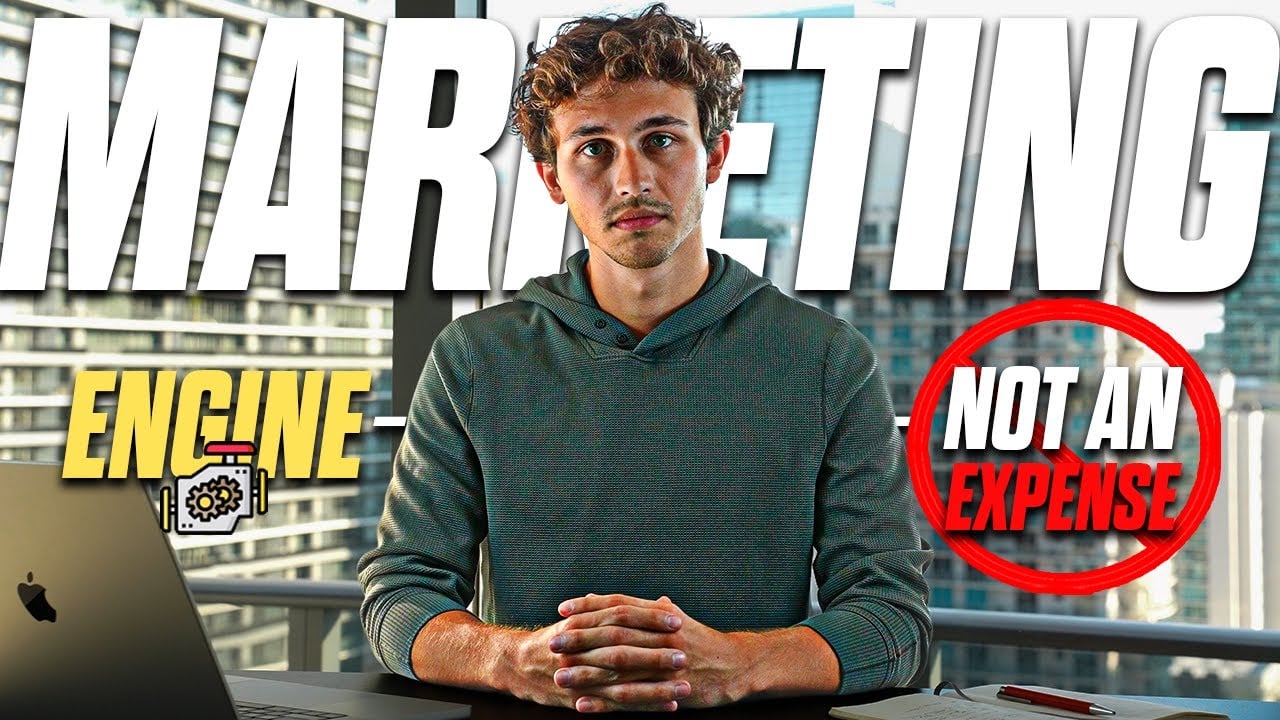
Lesson 1: Marketing Is The Engine, Not an Expense
After spending and managing millions of dollars in contractor ad spend, the biggest lesson and biggest takeaway is this: marketing is not an expense. It’s the heart, soul, and engine of these businesses.
A lot of people have come to us without any marketing at all. They’re stuck in the referral trap, relying on word of mouth and waiting for people to stumble across their website, if they even have one. There are no predictable acquisition systems built out in those businesses.
Once we came in, set up shop, and did what we do best, we quickly noticed that these systems took over the majority of the business. The majority of opportunities are coming into the business. Accounting for the majority of revenue coming into the business very quickly. And it became very scalable as well.
A lot of people think marketing is an expense. Spending money on ads is an expense. It’s really not. It’s the engine of the entire business in the first place. It’s what keeps the whole thing going.
The Common Mistake: Cutting Marketing When Times Get Tough
A lot of people make this mistake: when times do get tough, the first thing contractors cut or want to cut is the marketing budget. The thing that’s actually been giving them all of the work and keeping them busy for so long.
I’m going to bring up a couple of client examples. I’m not going to name-drop anyone, so I can go into more detail on the situations without giving too much away, out of respect for those people.
Client Example 1: The $300K Excavator
Here’s a quick client story:
I was just talking to somebody the other day. They booked a call with my co-founder and me, and we hopped on. Things were slowing down or whatever. Something wasn’t working that we were completely unaware of.
On our end, we were seeing a great cost per lead, a great conversion to appointment, a great appointment cost, and tons of bids coming through. It was looking good. We were booking this guy a ton of appointments.
We get on the call, and he goes, “Yeah, we’re pretty close to going out of business.”
And I ask, “What are you talking about?”
We’ve been partnered with this person for a while, and this is the first time I’ve heard any of this. So I was completely shocked. I did not anticipate that this conversation would go this way.
We start to get into it, and he tells me, “Yeah, money’s super tight right now. I just don’t have the budget anymore to keep all the marketing going.”
I then ask, “This has been the machine that has been pumping these appointments and these deals into your business, and all this cash collected. What’s going on?”
It’s worth noting that for this client, we had run a hiring campaign. A few-week-long staffing campaign because this dude was slammed.
He needed new operators, CDL drivers, and basically needed everything, which was a great thing. Having to hire is a great place to be. He was in a really good spot – well, before we had this conversation.
As it turned out, he had spent $300,000 on a new excavator.
I said, “Well, why did you buy the $300,000 excavator without having the work for it?”
And he told me, “Oh, well, I mean, things were looking good. It was looking promising at the time. I thought I was going to have the work for it.”
This is not the first time I’ve seen this happen, either. Somebody outspends themselves and puts themselves in a situation where they’re even considering cutting off their marketing and their acquisition systems, the fuel for this business.
We were running hiring campaigns, getting really aggressive on the marketing side with Google ads, and a whole bunch of other things were happening with this specific client. But he basically overspent and put himself in a really tough situation.
I had no idea. And as I said, it’s not the first time I’ve seen that either.
Client Example 2: The $150K in 4 Months
We had another client, too. I’ll give you the overview of what happened and how somebody else outspent themselves.
We worked with this person for 4 months or so. We pushed $150K of new cash through the door. Pretty solid, considering where the guy was before he started up with us. It was definitely a record revenue pace that the business was on.
And in the fourth month, at the end of the fourth month, it buys a new excavator or a skid steer, or both. Then buys a shop and has all the concrete redone there.
Basically, outspending himself and putting himself into a position where he just came to us the next month, towards the end of the fifth month, and he’s like, “Yeah, I don’t have the money. I can’t keep paying the ad spend. I’m completely out of money right now. I’m in a pretty tough spot.”
Again, just totally outspent himself. Got a bit of money, then totally overspent it.
Just let the marketing do its thing. You’re not in a position to buy a shop yet. Just stack the cash. Stack the cash and smart scale. Just keep smart scaling.
And, of course, with all of our clients, we’re very transparent and want to maintain an open line of communication with everyone we work with. We really encourage that. Everyone sees that from the onboarding process.
Just as we communicate with everyone through our internal communication system, we want full access to your team, and vice versa. So anything you need, we can go over and discuss.
And I mean, these guys, we were just in the dark. We had no idea any of this stuff was happening. Otherwise, we would have advised against it. But they just outspent themselves.
Lesson 2: Don't Cut Marketing When Times Get Tough
The point I’m getting to is this: when people get into a situation like this, where times are a little bit tough, or business has slowed down, the first thing they want to get rid of is their marketing.
The first thing. The thing that, for the majority of the time, keeps them busy and keeps cash flowing into the business.
They actually have a scalable system in place. Whether they’re working with us, doing it on their own, or with someone else, it doesn’t matter. The first thing they always want to cut is marketing. And they see it as an expense when it’s the exact opposite.
It’s the engine. It’s what’s actually keeping you busy.
If you have the systems in place that are tracking where all of your work is coming from, if you have a good SEO-optimized website. You’re running paid ads and you’re running Google ads or you’re doing database reactivations or you’re running TikTok ads, YouTube ads, whatever, you’re getting all of this overflow traffic.
Maybe somebody sees your Facebook ad, doesn’t opt in, then goes to Google, finds your website, and opts in there, or just calls the number listed on the website. There’s no way to really track that back.
That’s where a lot of times people might be like, “Oh, I closed all these jobs, but it didn’t come from the marketing.” When in fact, it was just an overflow from the marketing.
There are some things you can do to figure out exactly where that person originated, like installing tracking numbers on your website and everything. Or a tracking number on your Facebook page, Instagram page, whatever. There are things you can do to track that back.
The Whiplash Effect
But then, these businesses cut their marketing and their marketing expenses, and two months later, it’s like a whiplash effect. Once they cut it off, it takes a little bit, but then bang. A couple of months later, a few weeks, a couple of months, whatever, that’s when they start to really feel the impact of cutting off their marketing.
And it’s the complete opposite at the beginning, too. A lot of people don’t have any digital marketing. They start it. Then it goes a month, two months, and then bam. All the results actually flow in and hit them. Those marketing efforts finally catch up, and they start to see it materialize before their eyes.
Which is another important way to look at this.
It’s really important that you don’t see marketing as an expense. You need to see it as a scalable vehicle, the engine of your business that keeps pushing you forward and keeps getting you in front of new people, a colder audience, and new eyeballs. Someone who didn’t know who you were before they saw your last ad.
That’s where the scalability is going to start. You’re going to start seeing serious traction with the opportunities coming into your business.
Ready to Scale Your Land Management Business?
If you think your business is at a point where you’re ready to take on more work and looking to scale your business efficiently and take things to the next level, you should check out what Dirt2Dollars actually does.
What we do is run full-blown marketing systems for anything you can think of in digital marketing. We want to build that entire digital acquisition web around your business so you never have to go through another slow season again or worry about where the next opportunity will come from.
Everything from Facebook ads to Google ads to websites to SEO campaigns. You name it, we do it: database reactivations. We do it all to keep every area of your business busy and to give you the opportunities you need to succeed and scale your business.
As reflected in the title of this article, we have spent millions of dollars on ad spend. We’ve battle-tested strategies. We know what works. We’re really good at scaling them.
Book a call with our team to see if we can help your business out in the first place.
Lesson 3: Meta (Facebook & Instagram) Is The Surprise Winner
Another lesson we learned is that the surprise winner is still Facebook and Instagram for running paid ads and scalable campaigns.
A lot of people think, you’re reading this right now and thinking, “Oh, I only want to deal with commercial work. Or I only want jobs over a certain size. Facebook’s only good for small residential projects.”
It’s just not the case at all. It’s almost the complete opposite.
Yes, you can attract more sophisticated buyers and higher-ticket buyers to Google by opting in on your website.
But the chance that they see them and their interest in your business and brand is sparked first on Facebook and Instagram is much higher.
Or if they don’t opt in through your website, either organically on Google when they go and look you up, or on your site, or even if they do opt in on your site, the next time they open Facebook and Instagram, boom.
Now they’re being hit with and retargeted by all your ads.
When you’re tracking that data correctly and running your campaigns to drive website traffic, you’re reaching people who found you on Google. It’s literally this web. This web entangles anyone who comes anywhere near it.
And it’s good for pushing more sophisticated buyers along in the sales process.
Real Results From Facebook & Instagram
A lot of people think that Facebook, Instagram, or whatever other social media isn’t good. But in reality, it’s the complete opposite.
We have literally seen our clients close jobs from there.
One of the biggest ones was $1.25 to $1.5 million.
It was literally a Facebook ad that the person had opted into. Huge development group. Our client ended up winning the bid.
Buyers are there. The buyers are there, and then everything in between.
Yes, there are the $5,000 small jobs that are in and out, boom, done in one day. 10K jobs, 20K jobs might take a week, a week and a half. Everything in between.
We’ve seen residential jobs come in on Facebook and Instagram, with many in the $300K to $400K range.
It’s pretty incredible, and it’s surprising to many that Facebook and Instagram are so powerful. It’s really underrated.
We love getting people started on Facebook and Instagram. It’s one of the first acquisition channels we look to dial in and scale before tapping into a bunch of others at the same time. Again, it depends on where that business is and who we’re partnering with.
But yeah, 100% the surprise winner is Meta.
Lesson 4: Human-Centric Ad Creative Wins
Another lesson we’ve learned is that the winning ad creative is typically very human-centric.
Something we’ve seen: our clients who actually get in the ads themselves. A lot of people aren’t comfortable being on camera or speaking to a camera, or whatever.
I mean, we’ve had clients who’ve even just taken a picture of themselves with their guys in front of their equipment on a job site or something. We’ll lock that into the campaign and start running it. And ads like that do very well.
If you can get a happy client to shake your hand or something similar after the job’s done, in front of their property or house, whatever the case is, and then you can run that as an ad, those do really well.
What Works:
- Drone shots
- Timelapse videos
- Before and after videos
- Before and after pictures
- Pictures of completed projects
All of that stuff works really, really well. Really well.
But when you can actually incorporate some human-centric elements, such as featuring yourself in the ad, it becomes even more effective.
You can use this in a retargeting campaign to reach people who have been engaging with your business, seeing your ads in their feed over time, and are still unsure about taking action.
That small touch of human presence, which they can see when retargeted through paid ads, often helps push them over the edge.
We’ve seen that time and time again.
Lesson 5: Sales Skills Determine Your ROI
I could dive into a lot of different lessons, but this one is the most important that a lot of people leave out: Your sales skills will seriously determine your ROI. Seriously determine your ROI.
Your marketing can be dialed in and buttoned up to a tee. The whole funnel is golden. Conversion rates are golden. Everything, the costs, is beautiful. But if you can’t sell and you can’t close deals, you’re going to have a really tough go at it. Your ROI will look bad if you can’t actually sell the project.
A lot of people say to me, I’ve had a lot of people say to me in the past, “Oh, I can sell. I close eight out of 10 or something like that.”
But then, when I find out they’re only dealing with word of mouth and referrals, it’s like, okay, that makes sense.
Converting Cold Traffic Is Different
When you’re running paid aggressive marketing campaigns, you are tapping into and effectively trying to tap into an audience group that does not know who you are.
You need to tap into that audience group and know how to convert it.
And once you get very good at converting that audience group, the sky’s the limit. And you will have a predictable acquisition system for basically as long as you decide to stay in business. But you can actually close the deal.
It’s the biggest difference maker.
We tell our clients this too: We can create the best ads. We can set up the best funnels. We can send you a million appointments. But if you don’t close them, and you can’t close them, as I said, you’re going to have a really tough time.
And that’s a very overlooked area that you actually have to put in a little time and effort to get good at sales.
There’s a ton of free stuff on YouTube. I’ve made sales-centric videos on this channel. Go ahead and check them out. There’s a ton of good stuff in there.
But if you can’t close deals, it’s really hard. It’s really hard to scale campaigns. Because you’re not going to get the ROI on the back end, you’re not going to see the ROAS you should, even if you were decent or good at sales.
The Ultimate Metric: ROAS
The ultimate metric is your ROAS, or return on ad spend. That’s really what you want to look at.
When you put a dollar into the machine, how much do you get back on the back end?
For context, the machine is the campaigns and ads you’re running, or whatever funnels you’re running. How much do you have to put in, and then how much do you get back on the other end?
So if you put in $1, do you get back $6, $7, $8, $9, $10? Put in $1 and get back $20? That’s absurd, but it helps make the point. It’s not realistic.
Although we have had many clients achieve very high ROIs and returns on ad spend, as high as 50 or 60. But those results are not typical. That is not typical.
It really comes down to the sales skill of the business owner, the sales team we’re working with, or whatever. But we’ve seen some pretty crazy return on ad spend.
But that’s how you scale it. You can just keep shoveling more money into the machine and keep trying to reach a colder audience to convert them. That’s where companies will seriously start to scale.
If you think you’re good at sales or aren’t sure, you’ll find out quickly once you start running paid ad campaigns.
But again, it’s like anything. You put a little bit of time and effort into it. In the beginning, there’s a lot you can do.
We give our clients a ton of assets and in-depth sales training. If it’s necessary, or if it’s something we feel is bottlenecking the campaign’s growth, we will be right there with you to help you dial it in, review appointments with you, and make sure you’re doing everything you can, and everything we can, to get deals closed efficiently.
But that’s the biggest one: if you can’t sell, as I said, you’re going to have a tough time. You’ve got to get good at sales.
As I said, there are a handful of videos on our channel about sales. So I highly encourage you to check those out.
The Core Lessons
Those are just a handful of lessons we’ve learned on the front line. I could keep going here. This is a longer piece, but there is so much that I could get into.
We’ve spent millions.
We’re managing millions in ad spend.
So we’re constantly learning. And there’s just so many more things that I could have gotten into, but I feel like those that I went over are the core components and the core lessons that I think will go a long way when implemented correctly, before you start running paid ads or building out that digital acquisition system yourself or working with a company like us or whatever it is.
The 5 Core Lessons:
- Marketing is the engine, not an expense – It’s what keeps your business going, not a line item to cut when times get tough
- Don’t cut marketing when times get tough – That’s when you need it most; the whiplash effect is real
- Meta (Facebook & Instagram) is the surprise winner – We’ve seen $1M+ jobs close from Facebook ads
- Human-centric ad creative wins – Getting yourself in the ads pushes people over the edge
- Sales skills determine your ROI – You can have perfect marketing, but if you can’t close cold traffic, you won’t scale
Ready to build a predictable acquisition system that keeps you booked out 3, 6, 12 months at a time? Book a call with our team to see if we’re a good fit to help you scale your land management business.